
Services
Fitness News
About Michelle
Articles
Testimonials
Photos
Contact
Home
Fitness Training News
Tuesday, August 12, 2014
USAC Mountain Bike Certification Distinction and a busy summer, indeed!
2014 started a little slowly for Steve (husband) and me. We still had a lot of flood repair proects to do after the 2013 flooding. We started the new year being very grateful that we were alive and that our pets were all doing OK and they, too, made it through the flooding and mudslide. Still, riding a bike seemed miles or months away for us. I'm happy to say we have still been able to do our jobs, fix the home/property and get back into some mountain biking and road riding, specifically some randonneuring. We still have plans to make it to the 2015 PBP http://www.paris-brest-paris.org/index2.php?lang=en&cat=accueil&page=edito


Yes, it certainly has been a busy summer and most of my athletes are now in full swing of their summer cycling and racing goals. As I write this, one of my athletes from Canada is racing in the Breck Epic 6 day MTB Stage race http://breckepic.com/about-the-race/ and is on the third stage of the race. Another athlete just finished The Leadville Trail 100. http://www.leadvilleraceseries.com/mtb/leadvilletrail100mtb/. Yes, a great summer for mountain biking!
Not to leave out my road athletes. I've had two athletes do Iron Man races this year. One athlete raced in the http://www.ironman.com/triathlon/events/americas/ironman/lake-placid.aspx#axzz3A8G1U768 and another in the first ever (and biggest ever IM) in Boulder Colorado. http://www.ironman.com/triathlon/events/americas/ironman/boulder.aspx#axzz3A8G1U768.
Next on the summer list of rides is the http://www.hauteroutepyrenees.org/. Brendan from the Channel Islands and will be doing one last big push and then a taper leading into the end of August. Big goals means big fun and challenges.
One of my accomplishments this year was taking a second USAC distinction certification course. It was great fun taking this coaches course from Peter Webber. I now hole two USAC Certification Distinctions. One in CX and the other in mountain biking. It wasn't enough that I raced professionally for over 10 years on the mountain bike. It really helps to take skills clinics to brush up on new information or techniques and skills to pass on to my athletes.
That's all for now. I'm off to look up some race results and give some more tips to my clients and athletes. Thanks for reading.
Michelle
# posted by Michelle Grainger @ 1:15 PM 1 Comments


Wednesday, August 6, 2014
Leaville Traill 100 Mountain Bike race. August 9th 2014.The FIRST Leadville Trail 100 Mountain Bike Race.


Once upon a time ... my good friend Lorraine Forcina called me up and told me about this cool 100 mile mountain bike race. The only other race we knew of, like this one was up in Oregon. Of course we would go to Leadville. We never knew then, that this race would become the race of all races to define ultra distance mountain bike racing.
http://www.leadvilleraceseries.com/mtb/leadvilletrail100mtb/
It was the most amazing race I had ever done. It defined my career and moved me on to all sorts of ultra distance mountain bike events and races. Moving my goals higher and higher to set records on the sister 100 mile races, The Vail 100 and The Beaver Creek 100. From there my goals moved on to The Cape Epic Stage race and 24 hour racing with podium finishes around the world. Yes, the throw back days of The Leadille Trail 100 were the days I remember as the start of a fantastic mountain bike career. Thank you Ken, you changed my life in so many ways and I am so proud to have been a part of the early days. You are my kind of people!
A little Ken history as told on Wikipedia:
'Race co-founder Kenneth Chlouber, an avid marathon runner, conceived of the race as a way to make Leadville famous and bring visitors during a period of economic downturn. When he told the local hospital administrator about his idea he was told, "You're crazy! You'll kill someone!" Chlouber responded, "Well, then we will be famous, won't we?" '
http://en.wikipedia.org/wiki/Leadville_Trail_100
Back in those days I was coaching and racing as an Elitie and soon to be professional mountain bike racer. The Leadville Trail 100 taught me a lot and it helped me coach many great athletes to bigger and badder goals and races. Including myself.
As I would still coach someone today, being on the course as much as possible is key-knowing your course and planning. All summer long I/we went up and trained on the course. First doing sections of 25 and 35 miles at a time. Then about 4-6 weeks out we would do half of the course. Then, I would stay at altitude a lot for the last 3 weeks. I live and sleep at 7,000 feet but I have asthma and the Leadville course is/was very hard for me. I needed to train like I was going to climb a mountain. I was climbing a mountain! So that's how I trained.
A lot has changed and the promoters and qualifiers are different too. But, the race is still the best in the world and the toughest for many. It takes dedication, determination and a good attitude (at altitude) to get through it.
If you're racing in it this coming Saturday, good luck. You've done your homework and now it's the week to rest, do some intervals (short and sweet). Get yourself mentally prepared. Mental preparedness is at least 50% of the battle. Good luck out there and remember Ken's famous words. "You're better then you think you are, you can do more than you think you can". Ken those words are coming in pretty handy these days. Thank you!
# posted by Michelle Grainger @ 3:17 PM 0 Comments
Thursday, July 31, 2014

Iron Man comes to Boulder Colorado. Alicia Brillon (my good friend and client) will race in the August 2nd Boulder IM. We never thought an IM would come to Boulder, when we took this photo shortly after Alicia moved to Salt Lake City.
A great mid to late summer tip:
Mental Preparation.
Competition mental preparation are critical factors related to success in races and in life, in general.
My client/athlete, Clare Zecher finished the Lake Placid IM last weekend and found herself in a predicament. Not only did the officials have to "dump" the second swim lap and T1, Clare had a major wheel mechanical on ther first bike loop.
Most racers would have been out of the running (no pun intended) and given up. A dream lost after so many months of preparation. Not for Clare. She had a mental plan ready and she transferred what she was intending to use for/on the race to the attention needed to stay calm why neutral support helped her with her mechanical. Staying calm allowed her to use up some nervous energy when finally getting back onto the bike and make up some precious time. By the time Clare got into the run, she was calm and back on track and stayed in the moment. Clare did a PR on her run and came in under 12 hours. Way to go Clare!
Alicia also has a plan to stay focused while racing this weekend in Boulder.
Here's how to stay focused.
Use this great tip for your Boulder IM race (this weekend) http://www.ironman.com/triathlon/events/americas/ironman/boulder.aspx#axzz393YxExfJ
or use this tip for getting through another racing event, a tough day, or use this tip/technique for . It's a good lesson to "live in the moment". My best races and training events are where I practiced staying in the present moment. It's also called "The Zone" or some call it "The Flow". Try it.
(1) Use the time leading up to your race day having a well developed competitive routine. These few days are not just for physical recovery. It's about a mental plan, too.
(2) Have before hand and say positive affirmations all the way up to the start of the race.
(3) Practicing and thinking about these mental preparedness techniques will allow you to get into that state of mind quickly, while otherwise you may expend precious energy being nervous.
(4) Bring yourself back into the moment when you find your mind drifting during your race/event. Use a practiced key word that will allow you to pay attention to what you are doing in that very moment. Be in each and every moment. I use the work "go".
Good luck everyone. Be mindful of each and every moment.
And a big good luck to Alicia and good work Clare.
# posted by Michelle Grainger @ 11:20 AM 0 Comments
Wednesday, February 19, 2014
My Sister Lynne needs help and support. She was diagnosed with ALS.
http://www.lynnesjourney.com/30#comment-2
This has been a very hard thing for Lynne and for our family. It's been a challenge to say the least. We hope to get enough funding to go out of the country for stem cell therapy, which has the best chance to stop the symptoms and reverse the ALS. I know-some people will say we are chasing dreams. But we have researched a lot and because Lynne also had cancer last year she can no longer be considered for clinical trials.
Lynne is the best part of me. She is funny, smart, imaginative, innovative, creative and more...
http://www.lynnesjourney.com/30#comment-2
She has been working at throwing her whole life's savings at treatments, therapies, alternative and more. She has done all of this on her own and with support of friends and family. I can't imagine what it's like to lose everything you worked your whole life for. But we are hopeful and she courageous and doing everything all the docs know to help with this.
Now... we are starting a fund raising campaign. See link below for her new blog page.
Thank you-and I know this comes on the heel of so many wonderful friends and people helping Steve and I through the September flooding in Colorado. When it rains it pours. Did I really just say that? I did. And once again... it's pouring on us and we can use some more help.
Thank you to everyone for reading. I think this site may be about life and trying to ride and family and friends and........ you name it, I guess I'll try to write it.
Thanks,
Michelle
http://www.lynnesjourney.com/30#comment-2 # posted by Michelle Grainger @ 3:46 PM 0 Comments
Tuesday, June 18, 2013
I NOW HAVE A USA CYCLING CX DISCIPLINE SPECIFIC CERTIFICATION.Hi All....
I know it's been a while. I just have been busy and not paying attention to getting info onto the blog. I refuse to be one of the busy people that hire someone to write on their blog and so... I plod along making the best of it and hope to do much better moving forward.
So... exciting new news!!!!! I am now Certified by USAC for a new progrm called the "Discipline Specific Certification" program.
There are three types of certification courses we can take and I choose to start with CX. Why? I raced road and mountain bikes for many many years. And although equipment and training techniques change over time I decided to pick something I knew less about and could learn more about. I plan to take the mountain bike course in the near future.
The course was taught by the very well known Peter Webber and he did an excellent job of teaching the coaches all of the new skills required to teach our clients/athletes. I loved the course and am going to have a great time passing the information along to my current CX racers and new-future clients.
Here's what USAC has to say about these new exciting programs:
"USA Cycling's mission is to achieve sustained success in international cycling competition and grow competitive cycling in America. It is with this mission in mind we created our Discipline Specific Certifications. These Discipline Specific Certifications ensure coaches receive advanced training and coaching skills in cyclo-cross, track and mountain bike.
In order to attend a Discipline Specific Certification, you must be a licensed Level 3 coach or higher in good standing with USA Cycling.
Discipline Specific Certification Purpose
The purpose of the Discipline Specific Certifications is to teach coaches how to more effectively teach and coach their athletes in a specific cycling discipline. Coaches who attend these 1.5-day certifications can expect to gain valuable knowledge of specific drills and methodologies pertinent to helping their athletes achieve a higher level of success in their specific discipline. These certifications are meant to be enhancements to a coaches current USA Cycling coaching license; they do not replace licensing and are additions to your coaching credentials and specialties.
Cyclo-cross Specific Certification
During the Cyclo-cross Specific Certification, participants will learn a wide range of cyclo-cross skills and techniques to improve their coaching expertise. Topics include preparing a cyclo-cross specific training plan, equipment selection and set up, on-the-bike cyclo-cross skills and drills, bike handling in a variety of conditions, race craft, and tips to help your athletes avoid common mistakes. Whether you are coaching beginner or advanced cyclo-cross riders, this clinic will help you and your athletes achieve success.
Track Specific Certification
The purpose of the Track Specific Certification is to teach coaches how to run a safe, fun, and effective track workout, thus leading their athletes to a higher level of success on the track. Safety is the number one priority and is obtained through awareness, communication and predictability. This clinic will cover racing tactics, skill development, common terminology, general riding etiquette, as well as rider and coach responsibility.
Mountain Bike Specific Certification
The purpose of the Mountain Bike Specific Certification is to teach coaches how to teach their athletes the technical skills needed to ride and race a mountain bike. Topics include balance and movement on the bike, cornering, how to set up for switchbacks, front wheel lift, riding up and down ledges, and how to approach steep climbing and descents. In a group setting, participants will learn the techniques of not only how to ride technical sections, but how to teach others the skills needed to be safe and confident on the trail. In addition, participants will also learn and review general terminology, common problems, equipment issues, and skills specific to the various disciplines within mountain biking".
______________________________________
AND...........
In the Fall I'll be taking another power based coaches course. I took the very first power clinic offered by USAC-way back in the early 2000s ( I think then). I use power with about half of my clients/athletes I find I can always learn more. I still believe a lot can be accomplished with heart rate/HR training but there are issues with it as we know there are things like cardiac drift and other things that alter your HR making it not as accurate as training with power/watts.
Also new is that I am now training with StagesPower meters. They are incredible! Very accurate as I have trained side by side with my PowerTap (which I've been using for about 12 years). I actually think the StagesPower is more accurate. A great way to train. More on this later. You can check the StagesPower company out at http://www.stagescycling.com/stagespower.
Ok-so now you have the newest news. More to come-like the awesome 29er Prescott that KHS sent me. It makes riding so much fun!
http://www.khsbicycles.com/02_prescott_12.htm.
Have fun out ont he road, the track or the trails. I'll write again!
Michelle
# posted by Michelle Grainger @ 2:28 PM 1 Comments
Monday, November 12, 2012
Strength Training Over 40 from Cycing to Runnng to Swimming.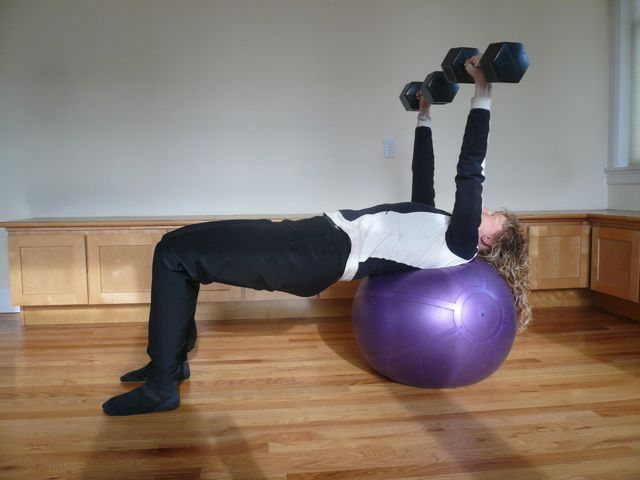 |
| Strength Training for the Core muscle groups and more.... |
A week or so ago I wrote about why it's important to do some sort of strength and core conditioning. You learned a little about me and why I feel so strongly
about lifting weights and doing resistance training. Of course, you’ll check in
with your physician to make sure lifting is medically OK for you to do. I would
also recommend you get a good Trainer or Physical Therapist to instruct you
with good form and proper technique.
The more we continuously do
resistance training or lift weights, the more we
can slow down and reverse the decline of muscle mass on
our bodies. We can also help
develop better bone density or
bone mass. You need resistance on all of your muscle
groups. There is also research
that shows that lifting weights and doing resistance training can actually
improve mood swings (think Manopause, ladies), help arthritis, improve past
injuries, help with current broken
bones (think ski accidents, bike falls, and simple every
day silly injuries).
The American College of Sports
Medicine (ACSM) recommends people 40 and over do
strength training exercises at
least 2-3 times every week. If you do not continuously work
all of your muscles to failure/fatigue you will not
get them to adapt to building muscle.
This means if you go to the gym
from December to February, next year when you come
back to the gym in December, you
are starting over. Over 40, you simply do not have this
valuable time to waste. The older
we get, the easier it is to lose our muscle.
Guess what? It’s never too
late to start. There are studies of elderly
men and women who were given a program of lifting weights three times per week
for a 10 week period. It was stated that they increased their strength by 113%.
This means their other activities could be done faster, they could lift more
objects, and sustain a more independent lifestyle.
The best exercises are multi joint
exercises in order to maximize your time in the gym
and work on those exercises that
train the muscle you use in every day activities. It is
especially important to strengthen
your deep mid-section muscles. We call this your
“core”. You use these muscles for
everything,, not just your sports activities. Try
standing up and put on your socks
and shoes. Now, bend over and pick up your tennis
bag. How about bend over your bathtub to clean the sides. You
have used your core
muscles for these activities. If
you cannot put on your shoes and socks while standing-
well, better get into that gym and
do some core exercises, and strength training.
 |
| Fitness Ball Pushups. |
Do not use a weight that is too
light. You want to feel mild
discomfort in your muscles
the day after your workout. I mean
mild. It takes about 24-48 hours for the muscle to go
through a process of repairing and then adaptation. You only want a small amount of
“micro-tearing” or mild muscle
damage to occur. A mild breakdown
of muscle protein
stimulates the rebuilding process
in your muscles. This is how the muscle adapts for each
new period of training or each new
load of weight. You do not want to feel a lot of pain
for several days because this will
be the result of too much muscle damage that will take
several days or weeks to recover
from. Go about 48 hours between workouts of each
muscle group in order to have full
recovery of the muscle fibers.
At all times you must maintain
proper form when weight lifting or doing any type of
resistance training. Do not use
momentum to lift or lower a weight. Do not bounce and
throw your weights or body around.
This is poor form and can cause injury.
You must
maintain good posture, and muscle
control.
Now let’s get started for a better and healthier life.
# posted by Michelle Grainger @ 5:24 PM 1 Comments
Now let’s get started for a better and healthier life.
Thursday, November 1, 2012
Endurance Cycling and Strength Training Over 40 years old. |
| Michelle demonstrates a Hamstring Exercise using a Fit Ball |
STRENGTH TRAINING FOR MEN AND
WOMEN OVER 40. Part one.
I've been a cyclist for the better part of 30 years. Road and mountain, long and short. I love it and will always try to ride for as long as I live. But... I have also been doing strength training in a gym setting for about 35 years. I love it, too and always have, even when it wasn't fashionable or considered something that cyclists should do.
Strength training of some sort has improved my life by giving me more
strength, preventing injury,
keeping me mentally focused, and giving me the extra
energy to do all of the activities- skiing, snowshoeing, hiking, and yes, cycling.
A life long regimen of strength training improved my 20
year racing career and helped make it possible to race at such a high level of
competition(pro field) into my 40s. Lifting weights and using weight machines has, especially, helped me keep lean
and fit as I head into my
50s. There's not a good reason to skip strength training as part
of your weekly activities after you have been cleared by your health care
professional.
It’s not enough to do aerobic activities without adding in several weekly
sessions of strength training, (science and research proves this). You need to
specifically work muscle to build muscle. Although, it is important to have
cardiovascular activities in our lives, strength training and resistance exercises
are likely more important.
Through some sort of resistance
training or training in a weight room, we (men and women) can increase strength
per pound of body mass and lean muscle mass. This is called strength-to-weight
ratio. The decline in muscle gets worse as we age because we lose the very
hormones that help us develop muscle and for women, it's worse. We have to keep working out muscles in
order not to lose our muscles. Get into a gym or figure out a way to do resistance workouts at home. Once a week IS NOT ENOUGH! You need to follow a plan 3-4 x per week. You also need to increase your load/resistance systematically each week. Remember: Stress + recovery = adaptation. Once your body gets used to a certain workout, change it. Change the pattern.
First hand learning experiences teach us a lot. Three years ago I was riding my
bike when the driver of a large truck hit me. At first I thought it wasn’t
“that bad” of an accident. What I didn’t realize was that I had very severe
PTSD and something the doctors call poly trauma injuries; injuries from head to
toe. My multiple injuries were not
going to heal without multiple surgeries, nor without having been very fit and strong to
start with. You see, I had a good amount of muscle on my body from continuous resistance training and not just riding my bike. It wasn’t just
my leg muscles that were fit from riding and hiking and skiing. I used
resistance workouts to make my back, arms, shoulders, and deep abdominal
muscles strong. I did twisting exercises, lifting, reaching, and more. Through my resistance training I wanted
to make sure if I had a fall doing the things I do in my every day aerobic activities, I would have balance, fitness, and strength to prevent injury. These resistance and strengthening workouts are
likely what saved me from life threatening injuries during the accident. It was the discipline of my life-long lifting and sports that gave me the strength
and stamina to persevere the aftermath of the trauma and months of healing and rehab. My
muscles had memory. They knew how to rebuild. This is why resistance training
is a lifelong endeavor.
 |
| Cross Training on the Mountain BIke |
Use it or lose it:
Facing multiple surgeries and recoveries in a short amount of
time meant a lot of down time from any activities. I knew I would loose a lot
of muscle, tendon, and ligament strength, and I would need to know how to
rebuild all of what I was going to lose.
Thankfully, it is a big part of what I do in my regular life and I
didn’t have to start learning new exercises- I already new how to build
strength.
Three years later, I’m convinced,
as are my doctors, that I was able to come back, repeatedly,
from so many surgeries because of
the muscular fitness and muscle strength I had prior to the accident. Every time I had a
surgery, I lost massive amounts of muscle within two-three weeks.
Quickly loosing muscle mass is a sad
fact of getting older not just from a long term lay off. We lose muscle at a very rapid rate when we don’t
continuously use it. The older we get the more we lose muscle and the harder it is to put back on. Starting out with a certain amount of muscle and having muscle memory with help you keep it that much longer.
If you can't go to a gym, use therapy
bands and dumb bells to work out at home.There are many exercises you can do at home.
You may not go through what I went
through but we all take falls. We’re active and we need to stay this way,
especially making sure we keep our muscles strong.
I'll get another post out about what types of things we can all do both in and out of the gym. Stay tuned and keep up the good work!
Monday, October 29, 2012
In Boulder, Cycling, Yoga, and Social Media |
| In Boulder riding with Steve. |
Sitting in class tonight in Boulder at the Social Media class. Good information on how to reach out from my blog site and my Tweets. I WILL try to do these much more often.
What I really wish I was doing is practicing my yoga like I did this morning, or riding with Steve in Boulder, like we did yesterday. We did a great 100KM Permanent Populaire. It's our endurance riding for the week. I was quite tired from it because we rode fairly hard after getting two flats. One each. As a cycling coach I try to practice what I preach. At least one long cycling ride each week through the Fall and Winter months.
Next ride may be a 200KM endurance ride next weekend. Maybe start in Boulder and head out toward Masonville. Who knows..... the sky.................is.... the...........
Labels: Boulder, cycling, cycling coach, endurance riding, Social Media, yoga
# posted by Michelle Grainger @ 8:09 PM 6 Comments
Wednesday, October 24, 2012
Winter Riding Tips and the Denver Post. |
| Friend and client Catherine Shenk knows how to dress for a cold winter ride |
This blog comes at a really good time, for a couple of reasons and because the Front Range of Colorado is about to get a big blast of winter.First reason: I was quoted in an article today from the Colorado Denver Post titled:
"Personal Trainers in Colorado like Michelle Grainger train in cold"
http://www.denverpost.com/outwest/ci_21830510/personal-trainers-colorado-like-michelle-grainger-train-cold
 |
| Friends ride together |

Another good tip is that you really need to dress for all different kinds of weather.
Layering your clothes and wearing the "right" cool and cold weather clothing is key to being able to stay active all Fall and Winter.
I like to wear plenty of wool clothing. I wear SmartWool socks and base layer. I find it never gets hot when I sweat or cold when it's wet. http://www.smartwool.com/.
 |
| Dressing for a winter hike |
A trick I use, and I stated in the Denver Post article, to keep your feet warm, is to wear a wool sock and place a pair of panty hose over them. This works well to keep in the heat and the wool sock keeps your feet from getting cold when they get wet from sweat. Personal trainers in Colorado like Michelle Grainger train in cold - The Denver Post http://www.denverpost.com/outwest/ci_21830510/personal-trainers-colorado-like-michelle-grainger-train-cold#ixzz2AEqIq7S.

If it's really really cold out you can add a layer of tin foil over your cycling shoe and under your shoe cover to get an extra layer of warmth and wind protection to your feet. I've used this trick while riding a 200km ride in January when the temperature was only 17 degrees (F) for most of the day's ride. I have to admit, though, I was not the happiest of riders on this cold ride. Just too cold.
The take away of the Denver Post article and this blog post is that you should continue to work out all winter long. If you don't want to do the activities inside, go outside but bring friends with you and dress for the conditions you'll be riding, running, hiking in. And..... have fun!
Tuesday, October 16, 2012
My 2012 1000km Brevet in Nova Scotia

So we begin again....
We originally had planned to head over to Scotland and participate in their new 1000km but found out the event was full within weeks of opening. Since I had a broken hip at that time, we didn't sign up. Oh well. We found a great 1000km Brevet to do in Nova Scotia. That became the goal for the season. It would also allow us part of our Randonneur 5000 . (rahn doe ner) - One of the most prestigious awards a randonneur can earn. To be one of the recipients, a randonneur must do a full series of 200, 300, 400, 600, and 1000km brevets, a Paris-Brest-Paris randonneur event, a Flèche team ride, and the remaining distances ridden on sanctioned brevets for a total of 5000 kilometers. The qualifying events must all be completed within a four-year period. You can read more about all of the awards available at http://www.rusa.org/.


We were planning for temperatures in the 60s. Nop,e we got 100 degree days. Oh well-at least we had planned for the wrst weather conditions and got sun, instead.
We had a great start time of 6 AM and that allowed for plenty of sleep before starting the 1000km Brevet. There were 5 of us at the start and we ended up staying together for the event.
Welcome to Nova Scotia. http://www.novascotia.com/en/home/default.aspx. The ride started right near our hotel in Dartmouth. The controls were in Sherbrooke, Half Island Cove, Port Hastings, Whycocomagh, St. Peters, Aulds Cove, Antigonish, Stellarton, Brookfield, and back to Dartmouth. Wonderful things to look at and keep us occupied. From rolling hills and 4-8 minute climbs, to small lobster villiages along the inlets and coves. Little towns and many little cafes to fill up on food and water.
The controls were about 100km apart. A little farther that what we are used to in the United States. Staying with the local riders proved to be prudent because we are so used to a gas station or small grocery store every 30 miles; about half the distance were were getting with the controls in Nova Scotia. Besides-it was very enjoyable to have the local company of the local riders. Very hospitable!

Steve and I had planned well for the conditions and hills of Nova Scotia. Actually they were not like the hills of Colorado, so we were prepared. Something one needs to consider when going to another country or state for a Brevet event-know your terrain.

Many of the controls (which also meant the stops for food) were at Tim Hortons. Perfect for soup, sandwiches, and other treats, and liquiq consumption.
The biggest challenge for me was the humidity (with the heat). I had decided to double up my shorts for a softer ride on the sit bones but ended up with a heat rash. No worries here-I adjusted to this by wearing only one pair of shorts for the second half of the 1000kms. No big deal. But something to keep in mind when you travel to different conditions. We often think about the terrain and the weather-but the weather can mean higher humidity and not just rain or sun.
My favorite parts of this ride were the people we rode with. The riders form the Nova Scotia. http://www.randonneurs.ns.ca/ club were so nice and helpful. The volunteers had our meals in the hotels ready when we arrived and also had our drop bags delivered into our hotel rooms.
We stayed as a group which is such a treat because often Randonneurs ride solo or get very spread out in long Brevet events.
The controls were well placed apart and came at times when we really needed to refeul and get ice (hot temps).
The scenery was fantastic and just what I would expect along coastal terrain.
We almost never saw a car and when we did they were extremely polite. Really!
It was a fantastic trip and we are well on our way for our http://www.rusa.org/award_r5000.html award which, of course is tied to the mother of all 1200km Brevet events-PBP (Paris Brest Paris) "PBP" as it is commonly called, is a grueling test of human endurance and cycling ability. Organized every four years by the host Audax Club Parisien, the Paris-Brest-Paris Randonneurs is the oldest bicycling event still run on a regular basis on the open road. Beginning on the southern side of the French capital, it travels west 600 kilometers to the port city of Brest on the Atlantic Ocean and returns along the same route. http://www.rusa.org/pbp.html
Thank you to our new friends in Nova Scotia for making our stay and ride wonderful!


# posted by Michelle Grainger @ 2:06 PM 0 Comments

Subscribe to Posts [Atom]